Showing posts with label #amzaonreview. Show all posts

Wednesday, February 19, 2025

A review of John Grisham's classic - The Summons

I have been a fan of John Grisham’s legal thrillers for as long as I can remember. A former lawyer who decided to pursue his passion for storytelling, Grisham writes what he knows - about law, and more interestingly how law impacts the lives of people.

Most of Grisham’s stories are set in Clanton and the Parrish nearby in Mississippi and he has been cranking out a novel a year for the past couple of decades. Each of his stories has ended up on best-seller lists selling millions of copies. 

His cult-like following was evident during a book signing I attended in Winston Salem, NC about 5-6 years ago. In this era of social media, it was interesting to see a hall packed with people who paid $25-$50  to meet their favorite author. Personal selfies with the man were extra. 


The Summons begins with the protagonist, Ray Atlee, a Law professor at the University of Virginia getting a letter from his dad summoning him back to Clanton Mississippi. Ray’s father, “judge” Atlee has been a beloved figure in the town of Clanton for decades and had a falling out with Ray and his brother Forrest. Judge Atlee was dying from cancer, which his estranged sons are acutely aware of. 

Ray calls up Forrest to ask if he’d gotten a similar summons from the Judge and Forrest says nonchalantly that he would try to be there. Ray drives 15 hours to Clanton, arriving an hour before the appointed 5 PM appointment.

He knocks on the door of their old family mansion with trepidation, and when he doesn't get a response, enters the house and walks up to the Judge’s study where the old man is sleeping - or so Ray thinks. He gets a diet soda from the fridge waiting for his old man to wake up. When he realizes that the Judge hasn’t moved even after the clock struck five, Ray suspects something is wrong. He makes small sounds to wake up his father and finally feels his pulse to find the Judge is indeed dead. 

Although the moment was long in coming, Ray is overwhelmed nevertheless. He is not sure what he must do but decides to walk around the house before calling the coroner and Harry Rex, their family friend.

While rummaging through the Judge’s study, Ray comes across a few filing boxes and on opening one is shocked to find stacks and stacks of 100 dollar bills bundled neatly. Ray’s mind begins to whirl and this discovery accentuates the shock of finding his father dead.

That his rather meticulous, honest, and well-known Judge in Clanton had stacks of three million dollars lying around is enough to raise all kinds of questions in Ray’s mind. But before he can begin to investigate, his immediate impulse is to hide the money before the coroner, police and hordes of visitors begin thronging in. Most importantly, Ray must hide the money from his brother who has been an addict for most of his adult life.

Ray’s search for the truth about the source of this amount and how it came into the Judge’s possession is filled with intrigue in Grisham’s classic narrative. 

Spoiler alert: After cheering Ray along on his admirable quest, we the readers are left wondering about the anti-climax.  

A novel like this made me reflect on the art and craft of storytelling along with the art of bringing to life the characters that Grisham has mastered. He does all this while taking the readers through the human side of law and lawyers. 


Monday, March 25, 2019

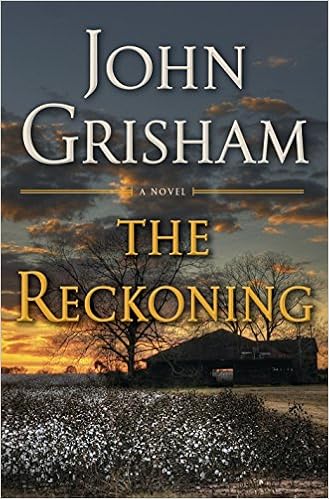
#Bookreview : The Reckoning: A Novel by John Grisham

Here's my recent review of John Grisham's "The Reckoning: A Novel"


Having read most of Grisham’s works, and having seen him give a lively talk to a hall-full of fans, I was ready for ‘The Reckoning’

The blurb explains that it is a “story of an unthinkable murder, the bizarre trial that followed it, and its profound and lasting effect on the people of Ford County.”

Set in the Nineteen forties cotton-picking South, Grisham throws in an ample dose of gentleman farmer’s family, blacks-vs-whites and the war. It is a story of Pete Banning, Clanton's favorite son, and war hero who kills the pastor of the local Methodist church and surrenders with a simple statement 'I have nothing to say.' And ‘why he did it’ is the mystery that Grisham keeps readers hooked on till the very end.

The first part of the book has a brief description of Pete Banning’s exploits and experiences during the war, but Grisham seems to relish taking us through the gory details of Guerrilla warfare. Even going past this to the end of the book, I was left scratching my head over the need for such detailed narrative on the topic of war.

The characters of Pete’s son, Joel is rather well developed and much of the narrative is through Joel’s eyes. The unpredictable end, however, is a satisfactory anti-climax that explains Pete Banning’s reason for ‘why he did it;’ and how it all backfired on him and on the Banning clan.

Saturday, July 28, 2018

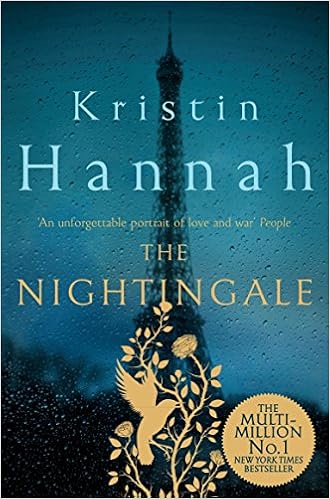
#BookReview Story of heroic women who (thankfully) downplay their feminism

During my rather long commutes, I try to drown out the cacophony of traffic by listening to audio-books. I recently downloaded an audio copy of Kristin Hannah’s ‘The Nightingale’ and finished the book during my commute in a couple of weeks.


My review from Amazon follows:


Kristin Hannah’s ‘The Nightingale’ is a bestseller for obvious reasons: strong characters who draw you in while the author weaves an interesting plot. Set in France, during the span of over two years during World War II, this is a story of two women. However, it is not just a story of strong, heroic women but the resilience of the human spirit.

Hannah’s skillfully develops the characters while keeping the story engaging and readable.

The story revolves around the lives of two sisters Viann and Isabelle who come to grips with the horrors of war in their own way. The younger sister Isabelle has moved back to their father in Paris while Viann is content with life in the French countryside. The vagaries of war throw unique changes at both sisters who facing terrifying situations and respond in their unique ways.

Spoiler alert: The ending of this saga is a bit clichéd but satisfying.

This book kept me engaged during my long commute during the week, and is likely to keep you engaged as well.

Saturday, June 17, 2017

Response to @JeffBezos request for ideas

Here was a recent tweet from Jeff Bezos, founder of Amazon.com


My response follows


Mr Bezos,

I commend you for the attempt to crowdsource ideas for philanthropy.  I will focus my response on a one word suggestion:

Population


As an Indian-American who spent much of his formative years in India, I had the opportunity to experience and observe the impact of burgeoning human population on our environment. During the past decade, I had the good fortune of living and working in a dozen countries across three continents and continue to reflect on the issues surrounding the population growth

Address a growing Population: Why this issue?


With over 7.2 billion people inhabiting this planet, and over 2.5 billion concentrated in Asia, there is a tremendous pressure on mother earth.

Let us set aside academic research and empirical studies for a minute. Just land at any airport in South-east Asia and take a ride into the city and you will see teeming masses of people.


There are several solutions to address the problem, but each requires tremendous resources (which your Philanthropy can help with) and a strong collaboration between Business, Governments, and Societies.

Why right-now?


You state that for philanthropy, you are drawn to “the other end of the spectrum: the right now.” The problem of over-population and population growth can be solved ‘right now.’ Just a couple of examples to illustrate the point:
  • The mother of four or five girls being forced to ‘try’ again for a boy will be highly thankful if her in-laws and husband are educated on the potential of a girl-child.
  • Any attempt to slowing the growth of population will be visible in the short-term and benefit societies in the long term. For example, the Chinese government was able to demonstrate it with the ‘one child’ policy in a generation.


Bottomline: Philanthropy, should follow the old adage “Give a man a fish….”

Image result for give a man a fish chinese proverb

Addressing the issues surrounding a growing population will help us ‘teach humans to fish…. and feed generations to come’ 

Monday, October 19, 2015

Book Review: Flood of Fire - by Amitav Ghosh

My review of "Flood of Fire: A Novel (The Ibis Trilogy)" by Amitav Ghosh


Amitav Ghosh’s book is a well-researched glimpse into the history and politics of British imperialism and the business of narcotic drugs and opium, masked as a fast paced novel. Told through the eyes of colorful characters like Kesri Singh, Shireen Moddie, Captain Mee and Zachary Reid, Ghosh transports us to the life and times of the colonial era, centered on the annexation of Hong Kong and Macau by the British nearly two centuries ago.

The novel begins with an introduction to some of the main characters that initially feels a bit overwhelming and excessive. The novel is sprinkled with Hinglish and Hindustani as spoken by ‘Gora Sahib’ of the era, adding to the authenticity of the narrative.
After wading through the buildup, readers can experience the lives of the main characters who happen to come together from different parts of the globe - Zachary Reid from America who is out to explore the world, but finds himself transforming into a guileful businessman, Captain Mee from the British Army who harbors a dark secret, Kesri Singh, of East India company’s army, recruited from the Indian Hartland, who typifies brown soldier-for-hire of the era and Shireen Moddie, the widow of a prominent Parsee opium trader from Mumbai who migrates to China, who like fellow Chinese Parsees traders has a secret life that unravels after his death.

The lives of the main characters are intertwined in the ships - Ibis, Anahita and Hind - that are transporting a cargo of Opium while helping imperial British Army fight the Chinese. The characters and their travails highlight the futility and lack of moral justification for the Opium Wars.

While this is a novel about the politics of Opium, drugs and war two centuries ago, there are distinct parallels for those of us watching the news of contemporary history unfold: the “war on terror” in the Middle East, Iraq and Afghanistan which is really about control of oil and energy.


(Cross posted from Amazon.com)

Sunday, January 4, 2015

Book reviw: "Family Life" by Akhil Sharma

I decided to read Akhil Sharma's Family Life after I came upon his essay in Sunday NYT (essay: “The Trickof Life”). The book is semi-biographical and expands on Mr. Sharma's essay  so I was prepared for a sorrowful narrative of the Sharma family saga. In the NYT essay, Akhil highlights the crux of his story:

“When I was 10 and he was 14, my older brother, Anup, dived into a swimming pool, struck his head on its bottom and remained underwater for three minutes. When he was pulled out, he could no longer walk or talk, could no longer feed himself, could no longer even roll over in his sleep. Only a few months before, he was heading to the Bronx High School of Science.

My parents are deeply pious Hindus. We had been in America for two years when the accident occurred, in 1981. And of course when tragedy occurs, even nonimmigrants and nonpious people find themselves turning to their most atavistic selves. My parents took Anup out of the hospital and brought him to our house. For the next 28 years, until he died, they tried to fix him through faith healing. Strange men — not priests or gurus, but engineers, accountants, candy shop owners — would come to the house and perform bizarre rituals, claiming that God had visited them in a dream and told them of a magical cure that would fix Anup.”

These two paragraphs are perhaps a summary of the book “Family Life.” If this was it, would the book have become a NYT bestseller? To continue to engage readers through descriptions of tormented youth is a skill in itself, and in this respect Akhil does not disappoint.

Much of the book focuses on the travails and tribulations of immigrant Sharma family seen through the eyes of the protagonist, Akhil. He wallows in self-pity while taking us through experiences of an Indian immigrant family in New York. And despite all odds, does well academically and is accepted into Princeton. The rest – a well paying job in investment banking etc follow.

No doubt Akhil and family were dealt a lemon, but as the adage goes ‘We cannot change the cards we are dealt, just how we play the hand.’ It is admirable that Akhil turned his lemon into a story, a bestseller at that!

Bottomline: “Family Life” is neither a must-read nor everyone's cup of tea. However, it is well written, fast paced read if you are in for it.

Note to self: If life gives you a lemon …. write a story about it. (My review on Amazon.com)

Sunday, November 2, 2014

Book review: Rogue Elephant: Harnessing the Power of India’s Unruly Democracy by Simon Denyer


Book Review


My Book review of "Rogue Elephant: Harnessing the Power of India’s Unruly Democracy" by Simon Denyer. Cross posted from Amazon.com

Rogue Elephant is an interesting analysis of some aspects of India's democracy. The author, who has spent the past decade or so reporting on India draws from his notes while highlighting observations.

The book begins and concludes with an analysis of the infamous gang-rape in Delhi that shocked the conscience of the nation. The author devotes several chapters to money and corruption with a brief review of the political players including Rahul Gandhi and Narendra Modi. Simon was rightly betting on one of them ascending to the role of India's Prime Minister. This ensures the book continues to be relevant in 2014 when published.

As with any political narrative, the views of the author and his biases are bound to creep in. This book is no exception. The author focuses on politics in the book while skimming economic reality of life and society. In reality both are intertwined and an analysis of one should include the other. Information Technology and Business Process outsourcing and globalization of Indian manufacturing get only a passing mention. Even the Telecommunication revolution that helped India leapfrog from obsolete land-lines to the information age gets only a passing mention. Instead, Simon focuses on corruption of telcom spectrum handouts. The fact that politicians skimmed billions from the deals is not debatable. However, the benefits of wireless revolution, getting rural Indians access to basic communication and on to information age is downplayed in the narrative.

Understanding the intricacies of India's democracy is hard, even for Indians living through the changes and more so for Non Resident Indians like self, who keep abreast of happenings digitally. Simon's readable book is sure to add to the knowledge base, and will be especially useful for those looking for a “political history” of India in the past decade.

Friday, October 10, 2014

Nobel Peace prize for 2014 and musing on David and Goliath

It is heartening to see the Nobel Peace prize for 2014 go to two South Asians, Indian children’s rights activist Kailash Satyarthi and Malala Yousafzai, a Pakistani teenager shot by the Taliban after campaigning for girls’ education.

I’ll admit, like most others living in the west would do, that Malala Yousafzai is a well known name but Kailash Satyarthi, who? I am sure this is about to  change with the announcement since most of us will not only become aware of Mr Satyarthi but also about the cause for which he stands.
Having just finished reading Malcolm Gladwell’s bestseller (my #amzaonreview), I was reflecting on Malala Yousafzai and her branding as the unlikely role of David she has been thrust upon to go against the Goliaths (Taliban) in Middle East and South Asia.

If I build on Gladwell’s argument in defense of “underdogs” who become unlikely heroes, Malala would certainly be on top of the list. Ever since Malala was shot by Taliban while on her way to school, her recovery has been watched, analyzed and projected larger-than life by western media. As per a recent Chicago tribune article, (link
"Yousafzai was only 11 when she began anonymously blogging for the BBC about her struggles. She was 14 when Taliban gunmen boarded her school bus, asked for her by name, and shot her in the head and neck. The girl survived and was flown to the U.K. for treatment."   And the rest, as they say, is history in the making
One can argue that in the fight against the bad guys, the Goliaths and Taliban, one has to win over the hearts of the public. A teenage girl, part of the underdog strata in the society that still oppresses women, who goes against the bad bully, Taliban is just the kind of hero one needs to win the hearts and minds of junta (public).  And by awarding a Nobel Peace prize to the teenage hero, we are doing just that: reinforce the will of Davids’ to stand up to the Goliaths!

(my #amzaonreview of David and Goliath: Underdogs, Misfits, and the Art of Battling Giants)