Showing posts with label #bookreview. Show all posts

Sunday, June 22, 2025

Book Review - Review and reflections on “When Breath Becomes Air”

 There’s an old adage that goes: the only certainties in life are death and taxes. And while death is inevitable for all of us, the how, why, and when remain the great unknowns — mysteries that both unsettle and sustain us. What would you do if you knew you had only six months to a year to live? Perhaps try to leave behind a legacy while your body slowly succumbs to the inevitable.

For Paul Kalanithi, an Indian-American neurosurgeon and writer, this wasn’t a philosophical exercise — it was his reality. In the final year of his neurosurgery residency at Stanford, Paul was diagnosed with stage IV lung cancer. Despite the best that modern medicine had to offer, the disease metastasized and spread rapidly. He was told he had less than a year to live.

The diagnosis arrived at the cusp of what should have been the most rewarding phase of his life — a promising career as a neurosurgeon and academic researcher. Paul and his physician wife, Lucy, were left reeling. But instead of retreating into despair, they chose to face the future with clarity and courage. This is not a book about “fighting cancer” or “winning battles.” It is, instead, a reflective and beautifully written chronicle of a life lived deeply — even as it draws to a close.

An English literature major, Paul brings lyrical sensitivity and philosophical inquiry to his writing. He retraces his journey from the son of Indian immigrants — in a family where a career in medicine was more or less a given — to a passionate lover of literature, and then back again to medicine, where he found a calling in neurosurgery.

Death, though inevitable, is something we rarely confront until it’s at our doorstep. Even for those of us who have experienced loss, the finality of our own end often feels too abstract to contemplate — a vague event lurking somewhere in the distant future. And perhaps that’s for the best. Until, of course, fate flips the hourglass and you can see the sand slipping away.


In the second half of When Breath Becomes Air, Paul offers an unflinching account of what it means to live with — and die from — cancer. His initial diagnosis brought cautious optimism, with an experimental drug offering temporary reprieve. But when the tumor returned, larger and more aggressive, Paul and Lucy could no longer pretend to fight it. They weren’t battling cancer; they were learning to live with its timeline. The book doesn’t peddle false hope. It’s not about defiance. It’s about acceptance.

As his condition worsens, Paul begins to write. With insight born of both medical training and lived experience, he documents his transition from doctor to patient. One of the most poignant moments in the book is when Paul removes his surgical coat for the last time — fully aware he will never again step into an operating room. Even more heartbreaking is his account of holding his newborn daughter, his body frail and trembling from chemotherapy.

I have reached an age where I’ve witnessed death — some timely, others tragically premature. And yet, I find myself still unable to fully grasp the inevitable arc of my own life. So I will file away Paul’s tender, searing prose for the time when I, too, must meet Death — and perhaps seek some solace in his words.

Footnote: A brief YT clip with reflections

Wednesday, February 19, 2025

A review of John Grisham's classic - The Summons

I have been a fan of John Grisham’s legal thrillers for as long as I can remember. A former lawyer who decided to pursue his passion for storytelling, Grisham writes what he knows - about law, and more interestingly how law impacts the lives of people.

Most of Grisham’s stories are set in Clanton and the Parrish nearby in Mississippi and he has been cranking out a novel a year for the past couple of decades. Each of his stories has ended up on best-seller lists selling millions of copies. 

His cult-like following was evident during a book signing I attended in Winston Salem, NC about 5-6 years ago. In this era of social media, it was interesting to see a hall packed with people who paid $25-$50  to meet their favorite author. Personal selfies with the man were extra. 


The Summons begins with the protagonist, Ray Atlee, a Law professor at the University of Virginia getting a letter from his dad summoning him back to Clanton Mississippi. Ray’s father, “judge” Atlee has been a beloved figure in the town of Clanton for decades and had a falling out with Ray and his brother Forrest. Judge Atlee was dying from cancer, which his estranged sons are acutely aware of. 

Ray calls up Forrest to ask if he’d gotten a similar summons from the Judge and Forrest says nonchalantly that he would try to be there. Ray drives 15 hours to Clanton, arriving an hour before the appointed 5 PM appointment.

He knocks on the door of their old family mansion with trepidation, and when he doesn't get a response, enters the house and walks up to the Judge’s study where the old man is sleeping - or so Ray thinks. He gets a diet soda from the fridge waiting for his old man to wake up. When he realizes that the Judge hasn’t moved even after the clock struck five, Ray suspects something is wrong. He makes small sounds to wake up his father and finally feels his pulse to find the Judge is indeed dead. 

Although the moment was long in coming, Ray is overwhelmed nevertheless. He is not sure what he must do but decides to walk around the house before calling the coroner and Harry Rex, their family friend.

While rummaging through the Judge’s study, Ray comes across a few filing boxes and on opening one is shocked to find stacks and stacks of 100 dollar bills bundled neatly. Ray’s mind begins to whirl and this discovery accentuates the shock of finding his father dead.

That his rather meticulous, honest, and well-known Judge in Clanton had stacks of three million dollars lying around is enough to raise all kinds of questions in Ray’s mind. But before he can begin to investigate, his immediate impulse is to hide the money before the coroner, police and hordes of visitors begin thronging in. Most importantly, Ray must hide the money from his brother who has been an addict for most of his adult life.

Ray’s search for the truth about the source of this amount and how it came into the Judge’s possession is filled with intrigue in Grisham’s classic narrative. 

Spoiler alert: After cheering Ray along on his admirable quest, we the readers are left wondering about the anti-climax.  

A novel like this made me reflect on the art and craft of storytelling along with the art of bringing to life the characters that Grisham has mastered. He does all this while taking the readers through the human side of law and lawyers. 


Friday, December 30, 2022

Musing on the year that was: goodbye 2022

Hard to believe 2022 has finally come to a close. 

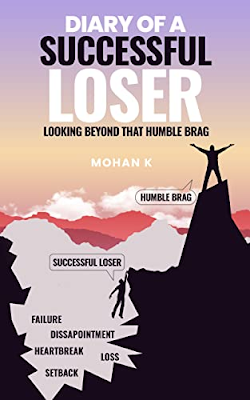
I have been observing that we are all successful losers. We are all losers because of the setbacks and failures we encounter in a life journey. Successful because we eventually overcome loss and failures. As we come to the end of another eventful year, a few of my musings on balancing it all

Loss and failures

  • My MF, investments and assets have been flat. The global stock market tanked, and they are talking about recession. Indian stocks aren’t doing great either

  • I have been working through the maze of agents, lawyers and officials on the paperwork for a piece of land my dad bought years ago. The issue keeps dragging on since I am hesitant to pay a “huge” bribe before assurance of approval.

  • At work, I see laggards regularly suck-up to the boss and get nominated for trivial awards that they post on LinkedIn. These ‘humble brag’ posts generate likes and shares, further reinforcing this charade

  • Few of my elderly relatives including grandma passed away this year


Successful

  • After a 2-year pandemic and slowdown, and got to travel a bit and meet with family and friends

  • I paid off our mortgage this year and resolved to live a debt-free life. Credit cards are handy to earn points or discounts as long as I pay it off monthly.

  • Despite a few minor bumps, the family continues to be in fairly good health, which is a great blessing.

  • I have continued to read, blog and write. My book that was published on Amazon, with 20+ reviews is reasonably successful  (Amazon - Diary of a Successful Loser)

  • My job allows me to WFH, that gives me a work-life balance


So, how have you been a successful loser in 2022?

Friday, December 9, 2022

I decided to use an Artificial Intelligence (AI) software for a promo-video for my new book. Here's' the result

Artificial Intelligence (AI) technologies and tools have been advancing at a fast pace. Many new tools continue to evolve and they are increasingly targeted at improving productivity of end consumers. 

After my book - Diary of a Successful Loser - was published last month, I had been reaching out to reviewers and bloggers. Along the way, I decided to explore the use of of Text-to-Video AI software to generate a promotional video for the book. 

Here is one version of a resulting video : What do you think?


While the resulting video is not bad, it is not as slick as one from a creative team or professional videographers. On the flip side, it is much better if not similar to what I would have got by paying a gig worker on Fivrr or Upwork 

After researching for a bit, I decided to use the freeware version Steve AI an online Video making software that creates Videos and animations in seconds. The UI is intuitive and easy to use after a quick signup. 

The challenge with Text-to-AI software is the human element and creativity - the creator (you and I) need a robust yet simple script with the right keywords that we can feed into the AI software. One can choose from a variety of templates, video and voice formats. After that, it is a matter of playing around with different formats, voiceovers and narratives. 

Bottomline: Image synthesis has great implications on creative arts and creation of visual art similar to what smartphones did to still camera. I came away impressed with the ease-of-use of such Ai software, and how they can be a powerful aid to less-creative people. With software like With steve AI’s video maker one can quickly create Facebook ads, video slideshows, newsfeed videos, stories, and cover videos. 


There are a number of 'Text to Video' AI software with varying levels of usability including 

  • OpenAI's DALL-e AI - Open AI announced that it removed the waitlist for its DALL-E AI image generator service. More than 1.5M users are now actively creating over 2M images a day with DALL·E—from artists and creative directors to authors and architects—with over 100K users sharing their creations and feedback in our Discord community.
  • Make-A-Video - Meta's Make-A-Video is an AI-powered video generator that can create novel video content from text or image prompts, similar to existing image synthesis tools like DALL-E and Stable Diffusion. Make-A-Video research builds on the recent progress made in text-to-image generation technology built to enable text-to-video generation. The system uses images with descriptions to learn what the world looks like and how it is often described. Link to Meta's research paper 
  • Stable Diffusion - A newly released open source image synthesis model called Stable Diffusion allows anyone with a PC and a decent GPU to conjure up almost any visual reality they can imagine. It can imitate virtually any visual style, and if you feed it a descriptive phrase, the results appear on your screen like magic.
  • Imagen Video - Google’s newest AI generator  that creates HD video from text prompts. Google's engineers claim it is a text-conditional video generation system based on a cascade of video diffusion models. Given a text prompt, Imagen Video generates high definition videos using a base video generation model and a sequence of interleaved spatial and temporal video super-resolution models. According to Google's research paper, Imagen Video includes several notable stylistic abilities, such as generating videos based on the work of famous painters (the paintings of Vincent van Gogh, for example), generating 3D rotating objects while preserving object structure, and rendering text in a variety of animation styles. Google is hopeful that general-purpose video synthesis models can "significantly decrease the difficulty of high-quality content generation."

Friday, November 25, 2022

My new stealth-help book - Diary of a Successful Loser

I invite you to review my  new stealth-help book - Diary of a Successful Loser  

If you are looking for a non-preachy self-help book with motivational stories, you are in the right place. This Kindle eBook is a Stealth help* book. The bestselling book with life stories that will leave you inspired.

All of us are successful losers – Losers because of the setbacks. Successful because we have overcome setbacks, loss and failures. This book is targeted at those who find typical self-help books - with preachy quotes and advice off-putting. 


In the narrative, I have picked up a few failures and setbacks that have been part of my life journey in ways that I didn’t anticipate. These stories hold a mirror to typical experiences that we are likely to encounter in a life journey
  • Bullying, teasing and jibes
  • Setbacks that reshape one's career
  • Breakup of a relationship
  • Loss of a loved one
  • Difference of opinion with a boss or colleague

These chapters in a life story, when stacked on top of one other. make for a memorable layered cake.

The book is available for Kindle Unlimited download on Amazon and on popular Amazon portals


In a span of a few weeks, the book has gathered nearly 50 reviews on Amazon


Stealth help book do what self-help books do - inspire and motivate - while they may not make you cringe or gag A mix of memoir and self-help genera, stealth help uses a person's experience to inspire readers to better their lives or themselves.

Friday, September 3, 2021

American Dirt (Oprah's Book Club): A Novel - #BookReview

With lockdowns and the pandemic slowing down life and travel as we knew it, I have been bing-listening to Audio Books during the past year. I generally listen to top-ranked non-fictional novels and most stories are transient in my mind. However, a few stories, linger in one's mind long after the book is finished. 

Jeanine Cummins's American Dirt is one such novel - and not surprisingly it has received a lot of acclaim including 51,000 reviews on Amazon! 


 Here is my review from Amazon

I came across American Dirt while searching for my next audio book and was captivated in the first few minutes. Midway through the saga, I googled the book and realized it was a bestseller with critical reviews. I decided to tuck aside that piece of information and continued the journey with the protagonist Lydia, her son Luca and their migrant cohorts as they make the treacherous journey "El Norte."

The story begins with Lydia and her eight-year-old son Luca witnessing the brutal murder of 16 of their family members while the pair have a miraculous escape. That sets in motion Lydia’s determination to escape to the US ("El Norte") with her son. We then join Lydia and Luca in their perilous journey on foot and top of goods train as they try to escape the wide net cast by a cartel boss.

The saga, set in a short span of a few weeks, has a bit of everything – philosophy in the form of Lydia’s oft repeated mantra “try not to think,” suspense, crime, drug lords, cartels and drama. It also tries to give us a glimpse into the sordid state of affairs when a drug-cartel takes over a placid Mexican town. With a few characters who join Lydia and Luca in their journey, the author attempts to highlight why some migrants risk their lives to try to cross the border "El Norte."

Bottomline: Follow Lydia’s advice; “try not to think” of the reviews and just enjoy a good read.

Monday, March 25, 2019

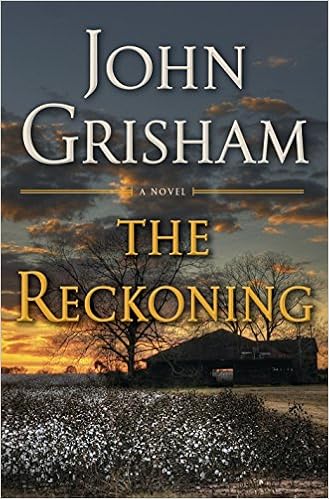
#Bookreview : The Reckoning: A Novel by John Grisham

Here's my recent review of John Grisham's "The Reckoning: A Novel"


Having read most of Grisham’s works, and having seen him give a lively talk to a hall-full of fans, I was ready for ‘The Reckoning’

The blurb explains that it is a “story of an unthinkable murder, the bizarre trial that followed it, and its profound and lasting effect on the people of Ford County.”

Set in the Nineteen forties cotton-picking South, Grisham throws in an ample dose of gentleman farmer’s family, blacks-vs-whites and the war. It is a story of Pete Banning, Clanton's favorite son, and war hero who kills the pastor of the local Methodist church and surrenders with a simple statement 'I have nothing to say.' And ‘why he did it’ is the mystery that Grisham keeps readers hooked on till the very end.

The first part of the book has a brief description of Pete Banning’s exploits and experiences during the war, but Grisham seems to relish taking us through the gory details of Guerrilla warfare. Even going past this to the end of the book, I was left scratching my head over the need for such detailed narrative on the topic of war.

The characters of Pete’s son, Joel is rather well developed and much of the narrative is through Joel’s eyes. The unpredictable end, however, is a satisfactory anti-climax that explains Pete Banning’s reason for ‘why he did it;’ and how it all backfired on him and on the Banning clan.

Saturday, July 28, 2018

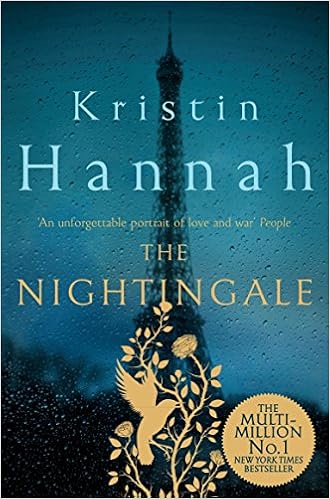
#BookReview Story of heroic women who (thankfully) downplay their feminism

During my rather long commutes, I try to drown out the cacophony of traffic by listening to audio-books. I recently downloaded an audio copy of Kristin Hannah’s ‘The Nightingale’ and finished the book during my commute in a couple of weeks.


My review from Amazon follows:


Kristin Hannah’s ‘The Nightingale’ is a bestseller for obvious reasons: strong characters who draw you in while the author weaves an interesting plot. Set in France, during the span of over two years during World War II, this is a story of two women. However, it is not just a story of strong, heroic women but the resilience of the human spirit.

Hannah’s skillfully develops the characters while keeping the story engaging and readable.

The story revolves around the lives of two sisters Viann and Isabelle who come to grips with the horrors of war in their own way. The younger sister Isabelle has moved back to their father in Paris while Viann is content with life in the French countryside. The vagaries of war throw unique changes at both sisters who facing terrifying situations and respond in their unique ways.

Spoiler alert: The ending of this saga is a bit clichéd but satisfying.

This book kept me engaged during my long commute during the week, and is likely to keep you engaged as well.

Wednesday, May 18, 2016

Book Review: Modern medicine and Mortality 101


My #bookReview of "Being Mortal: Medicine and What Matters in the End" by Atul Gawande
I have been a fan of Mr. Gawande’s writing, and had read his earlier bestseller “complications: A Surgeon's Notes on an Imperfect” and other articles in New Yorker. I like the lucid, narrative style in which he explores medical topics which many of us laymen might find hard to comprehend.  I picked up “Being Mortal” for another practical reason: I happen to be an Indian-American, with aging parents living in the old country, and a father who is undergoing treatment for an advanced prostate growth.

As humans, we are confronted with death, dying and mortality of life that sometimes comes with old age and disease but also confronts us at the most unexpected of times. Most of us look to prolong life, in many cases blinded by the promise of technical advances in modern medicine, but disregard or ignore the risks and side- effects such practices can have on quality of life.

Based on extensive research, interviews and review of several case studies, Atul Gawande’s though provoking book is not just topical, but for some, may also be a timely read.  What makes this book especially readable is the ‘life’ Atul brings to a rather morbid topic (sic!)

In the first few chapters, Atul starts by building a case for medical care professionals to be aware of geriatrics:

“most doctors treat disease and figure that the rest will take care of itself. And if it doesn’t – if a patient is becoming infirm and heading toward a nursing home – well, that isn’t really a medical problem, is it?”

Grounded in extensive research and analysis, Atul also opens himself up by exploring the experiences of his wife's grandmother and his own father as they and their family come to grips with mortality. He also lucidly describes how his family prepared for their death with dignity, at their own terms:

“The neck pain remained annoying …. But they also knew what mattered to him and left well enough alone. This was, I remember thinking, just the way I ought to make decisions with my own patients – the way we all ought to in medicine.”

Even his narratives on diseases and death, while exploring scores of case studies are expressive, and tend to stay away from clinical text; for instance, when he summarizes “no matter how much one has seen, nature refuses predictability”

Being Mortal is a very readable book that explores a demanding topic that can be deeply personal.

Wednesday, February 3, 2016

Musing on Food, Protein and Vegetarianism

My journey into the complex and fascinating business of agriculture started a little more than four years ago when I took on a role of Enterprise Architect with a multinational Agribusiness company. Learning about the “business” is critical for EA’s, given the role we play in bridging the IT-business divide. One could argue many of us – even urbane city dwellers - are not too far removed from food, and the business of getting food to the table. While my day job primarily focuses on Business Processes and services enabled by Technology, I try and keep abreast of the business of food. A recent book by Dr. Garth Davis’s “Proteinaholic: How Our Obsession with Meat Is Killing Us and What We Can Do About It” caught my attention.
In the nearly two decades that I have spent living in the west - in North America and Europe - as a vegetarian, I have been fascinated by the westerners’ penchant for protein in their diets. This has defined modern food habits and the central role meat and meat based entrée play in our daily lives. I am often asked by colleagues and friends about my protein intake and where vegetarians get this “much needed” nutrient. Rather than getting into a debate on my dietary preference, I downplay my vegetarianism or just deflect the questions. I realized that Dr. Davis’s book, although intended for a meat-eating audience, also offers tips that vegetarians can use to explain the benefits of their dietary preferences.
The well-researched book written in a folksy narrative style addresses some of the very same topics I had been observing, and reflecting on, much of it empirically. In the book, Dr. Davis takes us through a journey of his discovery and research on diet, after his flailing health acts as a call-to-action. Chapter after chapter, he refers to data and research to emphasize why excess protein (and meat) consumption by humans is neither necessary nor beneficial to the health and sustenance. He starts by explaining the major fallacy of modern medicine and how he “had come to view human body as a kind of expensive, unreliable car – something that was always breaking down and needing to be repaired. I was totally focused on treating disease – prevention hadn’t really entered my mind as a possibility.” 
I read the book with much interest; however, I am left shaking my head on whether it will make a dent in meat-centric diets that the western readers are used to. I am willing to bet that most, if not all Americans reading the book aren’t going to share the same epiphany as Dr. Davis, or the enthusiasm to convert to vegetarianism. Just a few reasons why:
  • Food is an acquired taste. One grows up eating comfort food at home and school and with family and friends. Preferences and attitudes towards food, taste and diet that one acquires at an early age are hard to change. For instance, even after having lived in the west for most of my adult life, I still find a plate of rice or rotis and lentil soup (Dhal), the Indian staple I grew-up on to be my comfort-food. Likewise, an American growing up on Burger-and-fries or pepperoni-Pizza is not going to easily acquire a taste for lentil-soup and rice or other vegetarian foods.
  • Western penchant for meat is exported as a subculture. In their quest to ‘globalize,’ newly affluent Chinese and Indian middle-class is taking to meat and poultry like duck to water. This trend is not likely to reverse anytime soon; and is likely to amplify as the next generation that is growing up on a diet of meat is going to look to it as comfort food.
  • Don’t under-estimate the power of food industry resistant to change. An entire multi-billion dollar industry thrives on converting grains, corn and soyabeans into cattle and poultry that in turn are slaughtered and processed into burgers and meat. This industry is likely to work hard to ensure status-quo, and continue to dictate consumer tastes in meat.
  • Doctor heal-thyself – in the first few chapters of the book, the author makes a point of emphasizing how modern medicine is focused more on cure, and less on prevention; and how diet receives minimal attention in modern medicine.  It would take scores of western doctors like Dr. Davis to have an epiphany, and a change in mindset, before they get to a point where they can prescribe a change to the rest of us.
Bottomline: Views and habits, especially when it comes to food are going to be especially hard to change. But for those looking to firm up their views on Protein in our diets, this book is a good reference

Monday, October 19, 2015

Book Review: Flood of Fire - by Amitav Ghosh

My review of "Flood of Fire: A Novel (The Ibis Trilogy)" by Amitav Ghosh


Amitav Ghosh’s book is a well-researched glimpse into the history and politics of British imperialism and the business of narcotic drugs and opium, masked as a fast paced novel. Told through the eyes of colorful characters like Kesri Singh, Shireen Moddie, Captain Mee and Zachary Reid, Ghosh transports us to the life and times of the colonial era, centered on the annexation of Hong Kong and Macau by the British nearly two centuries ago.

The novel begins with an introduction to some of the main characters that initially feels a bit overwhelming and excessive. The novel is sprinkled with Hinglish and Hindustani as spoken by ‘Gora Sahib’ of the era, adding to the authenticity of the narrative.
After wading through the buildup, readers can experience the lives of the main characters who happen to come together from different parts of the globe - Zachary Reid from America who is out to explore the world, but finds himself transforming into a guileful businessman, Captain Mee from the British Army who harbors a dark secret, Kesri Singh, of East India company’s army, recruited from the Indian Hartland, who typifies brown soldier-for-hire of the era and Shireen Moddie, the widow of a prominent Parsee opium trader from Mumbai who migrates to China, who like fellow Chinese Parsees traders has a secret life that unravels after his death.

The lives of the main characters are intertwined in the ships - Ibis, Anahita and Hind - that are transporting a cargo of Opium while helping imperial British Army fight the Chinese. The characters and their travails highlight the futility and lack of moral justification for the Opium Wars.

While this is a novel about the politics of Opium, drugs and war two centuries ago, there are distinct parallels for those of us watching the news of contemporary history unfold: the “war on terror” in the Middle East, Iraq and Afghanistan which is really about control of oil and energy.


(Cross posted from Amazon.com)

Sunday, January 4, 2015

Book reviw: "Family Life" by Akhil Sharma

I decided to read Akhil Sharma's Family Life after I came upon his essay in Sunday NYT (essay: “The Trickof Life”). The book is semi-biographical and expands on Mr. Sharma's essay  so I was prepared for a sorrowful narrative of the Sharma family saga. In the NYT essay, Akhil highlights the crux of his story:

“When I was 10 and he was 14, my older brother, Anup, dived into a swimming pool, struck his head on its bottom and remained underwater for three minutes. When he was pulled out, he could no longer walk or talk, could no longer feed himself, could no longer even roll over in his sleep. Only a few months before, he was heading to the Bronx High School of Science.

My parents are deeply pious Hindus. We had been in America for two years when the accident occurred, in 1981. And of course when tragedy occurs, even nonimmigrants and nonpious people find themselves turning to their most atavistic selves. My parents took Anup out of the hospital and brought him to our house. For the next 28 years, until he died, they tried to fix him through faith healing. Strange men — not priests or gurus, but engineers, accountants, candy shop owners — would come to the house and perform bizarre rituals, claiming that God had visited them in a dream and told them of a magical cure that would fix Anup.”

These two paragraphs are perhaps a summary of the book “Family Life.” If this was it, would the book have become a NYT bestseller? To continue to engage readers through descriptions of tormented youth is a skill in itself, and in this respect Akhil does not disappoint.

Much of the book focuses on the travails and tribulations of immigrant Sharma family seen through the eyes of the protagonist, Akhil. He wallows in self-pity while taking us through experiences of an Indian immigrant family in New York. And despite all odds, does well academically and is accepted into Princeton. The rest – a well paying job in investment banking etc follow.

No doubt Akhil and family were dealt a lemon, but as the adage goes ‘We cannot change the cards we are dealt, just how we play the hand.’ It is admirable that Akhil turned his lemon into a story, a bestseller at that!

Bottomline: “Family Life” is neither a must-read nor everyone's cup of tea. However, it is well written, fast paced read if you are in for it.

Note to self: If life gives you a lemon …. write a story about it. (My review on Amazon.com)

Sunday, November 2, 2014

Book review: Rogue Elephant: Harnessing the Power of India’s Unruly Democracy by Simon Denyer


Book Review


My Book review of "Rogue Elephant: Harnessing the Power of India’s Unruly Democracy" by Simon Denyer. Cross posted from Amazon.com

Rogue Elephant is an interesting analysis of some aspects of India's democracy. The author, who has spent the past decade or so reporting on India draws from his notes while highlighting observations.

The book begins and concludes with an analysis of the infamous gang-rape in Delhi that shocked the conscience of the nation. The author devotes several chapters to money and corruption with a brief review of the political players including Rahul Gandhi and Narendra Modi. Simon was rightly betting on one of them ascending to the role of India's Prime Minister. This ensures the book continues to be relevant in 2014 when published.

As with any political narrative, the views of the author and his biases are bound to creep in. This book is no exception. The author focuses on politics in the book while skimming economic reality of life and society. In reality both are intertwined and an analysis of one should include the other. Information Technology and Business Process outsourcing and globalization of Indian manufacturing get only a passing mention. Even the Telecommunication revolution that helped India leapfrog from obsolete land-lines to the information age gets only a passing mention. Instead, Simon focuses on corruption of telcom spectrum handouts. The fact that politicians skimmed billions from the deals is not debatable. However, the benefits of wireless revolution, getting rural Indians access to basic communication and on to information age is downplayed in the narrative.

Understanding the intricacies of India's democracy is hard, even for Indians living through the changes and more so for Non Resident Indians like self, who keep abreast of happenings digitally. Simon's readable book is sure to add to the knowledge base, and will be especially useful for those looking for a “political history” of India in the past decade.